Your Yard Should Feel Like Yours.
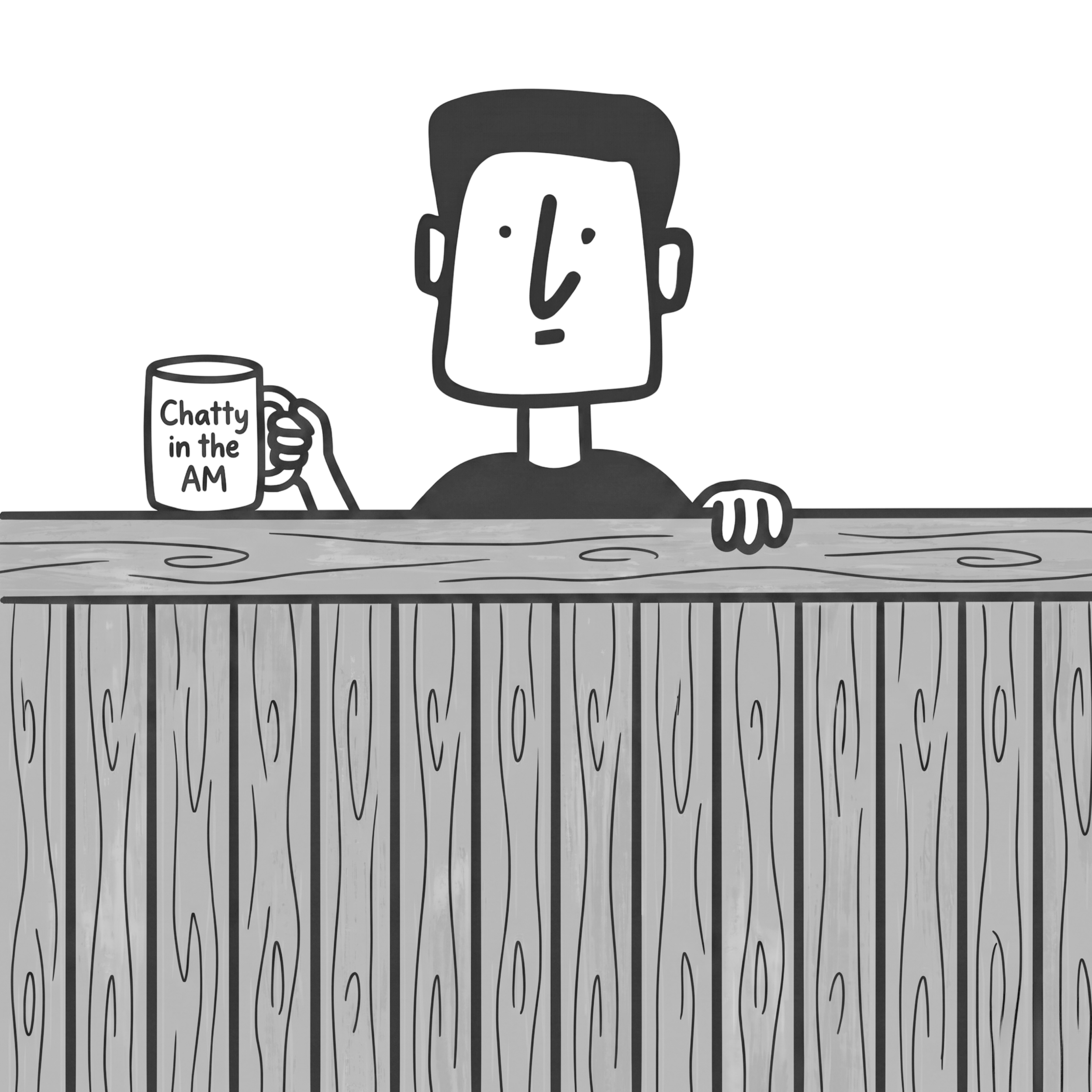
It is hard to relax in a space that feels publicly available.
You notice who can see the patio. You move the chairs. You stop using the pool at certain times. The kids play in a different part of the yard. Dinner moves inside. The hot tub stays covered.
That is not a vague landscaping preference.
It is a real problem with the way home feels and functions.
You do not need to hide the entire property or build a fortress around it. You need to solve the view that is changing how the space is used.

The Wrong Solution Can Look Like Progress.
Most privacy projects begin with a purchase.
Something tall. Something fast. Something evergreen. Something available now.
For a while, it feels like progress.
Then the view slips over it, around it, or through it. The plants struggle. The fence solves the ground-level problem but not the elevated one. The screen becomes too wide for the space. The fast-growing answer becomes a permanent pruning job.
A healthy plant can still be the wrong answer.
A well-built fence can still be in the wrong place.
That is how people end up buying privacy twice.
Stop Guessing Before the Expensive Part Begins.
Privacy Without Regret is not a catalog of attractive backyard ideas.
It is a working decision system that helps you:
Define the privacy problem before choosing the solution
Decide whether plants, structure, or a combination makes sense
Account for the property, rules, timeline, budget, and future workload
Enter nursery, contractor, installer, or HOA conversations with a clear plan
Recognize when a recommendation solves the problem and when it quietly creates another one
The Field Guide does not make the decision for you.
It gives you a way to make it without guessing.
A Measured Method for Residential Privacy That Works
You Came Outside to Relax. Not to Feel Watched.
An upstairs deck now looks into the patio. A camera reaches the hot tub. A sidewalk view cuts across the pool. A neighbor’s window turns the outdoor table into a stage.
Nothing about the yard may have changed physically.
But the way your family uses it has.
Privacy Without Regret helps you solve that problem before you buy the hedge, fence, panel, plants, or labor. It gives you a clear way to understand the exposure, choose an approach your property can support, and build a privacy plan before the money is spent.
Plan first. Buy once. Maintain honestly.
Turn the Privacy Problem Into a Plan.
Before the Field Guide, the problem is a feeling:
This yard feels exposed. We need to put something there.
After the Field Guide, the decision is clear:
This is the view affecting our space. This is the kind of solution this property can support. This is where it belongs. This is the timeline and maintenance commitment we accept.
That is the value of the book.
Not another attractive idea.
Control before commitment.
Real Yards Come With Real Constraints.
This is not advice for a fantasy yard with unlimited space, perfect soil, no rules, no deer, and no deadline.
It is for the property you actually have.
The one with the upstairs neighbor. The HOA limit. The narrow side yard. The camera angle. The shade. The failed planting. The family that wants to use the patio this season, not someday.
You do not need a perfect property.
You need a plan that respects the property you have.
A Field Guide Designed to Be Used.
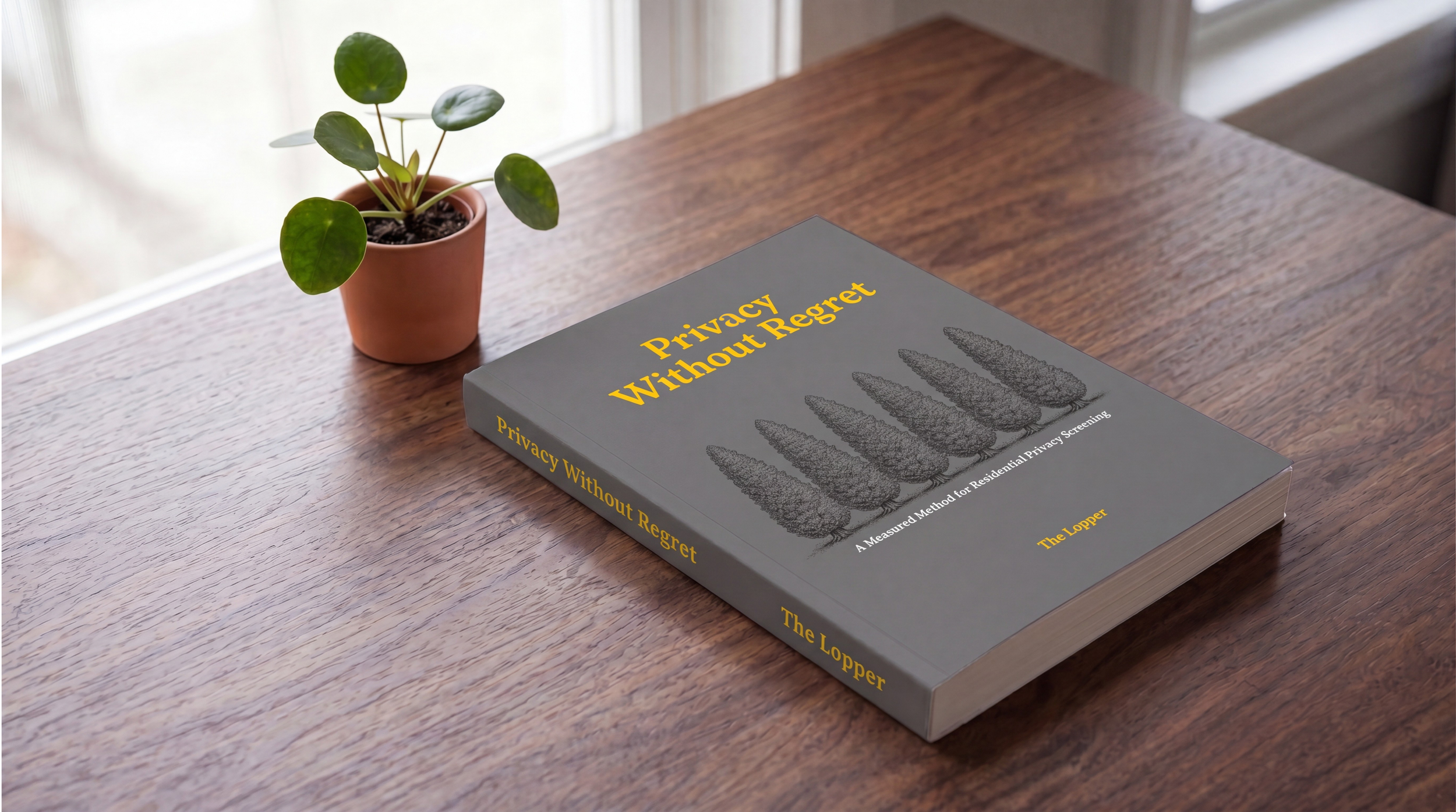
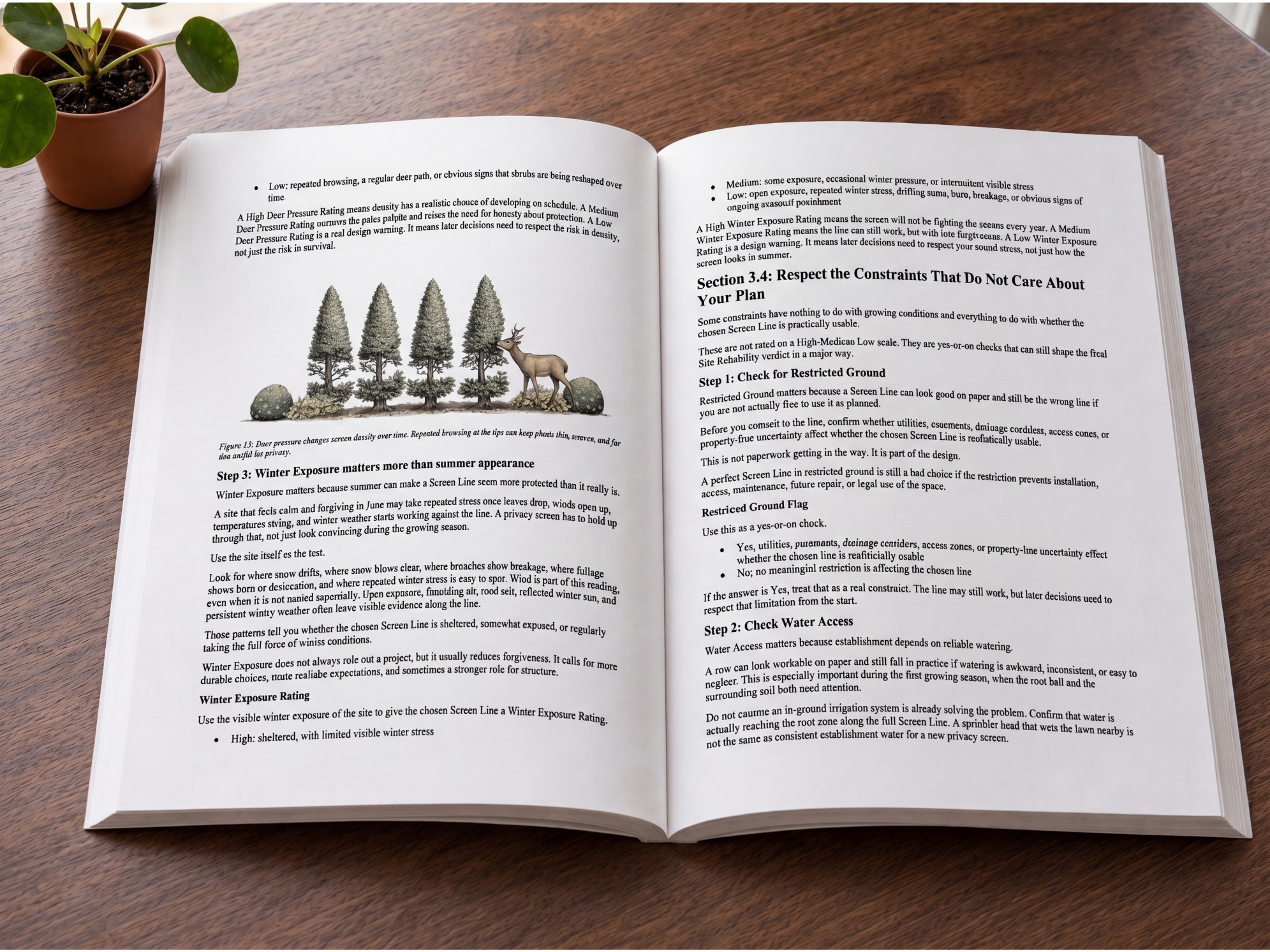
Privacy Without Regret is a complete printed Field Guide designed to be read, marked up, and used while the project takes shape.
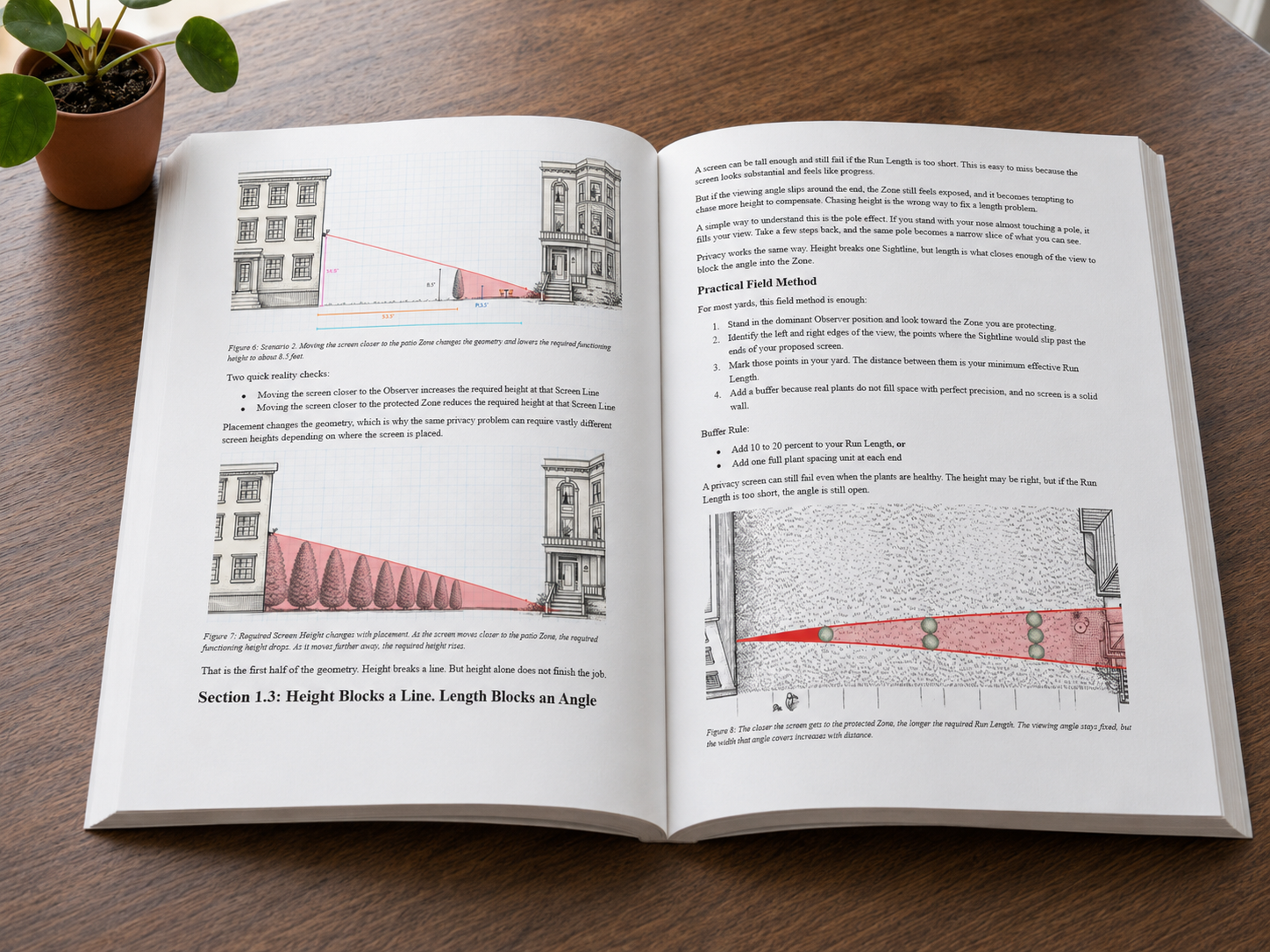
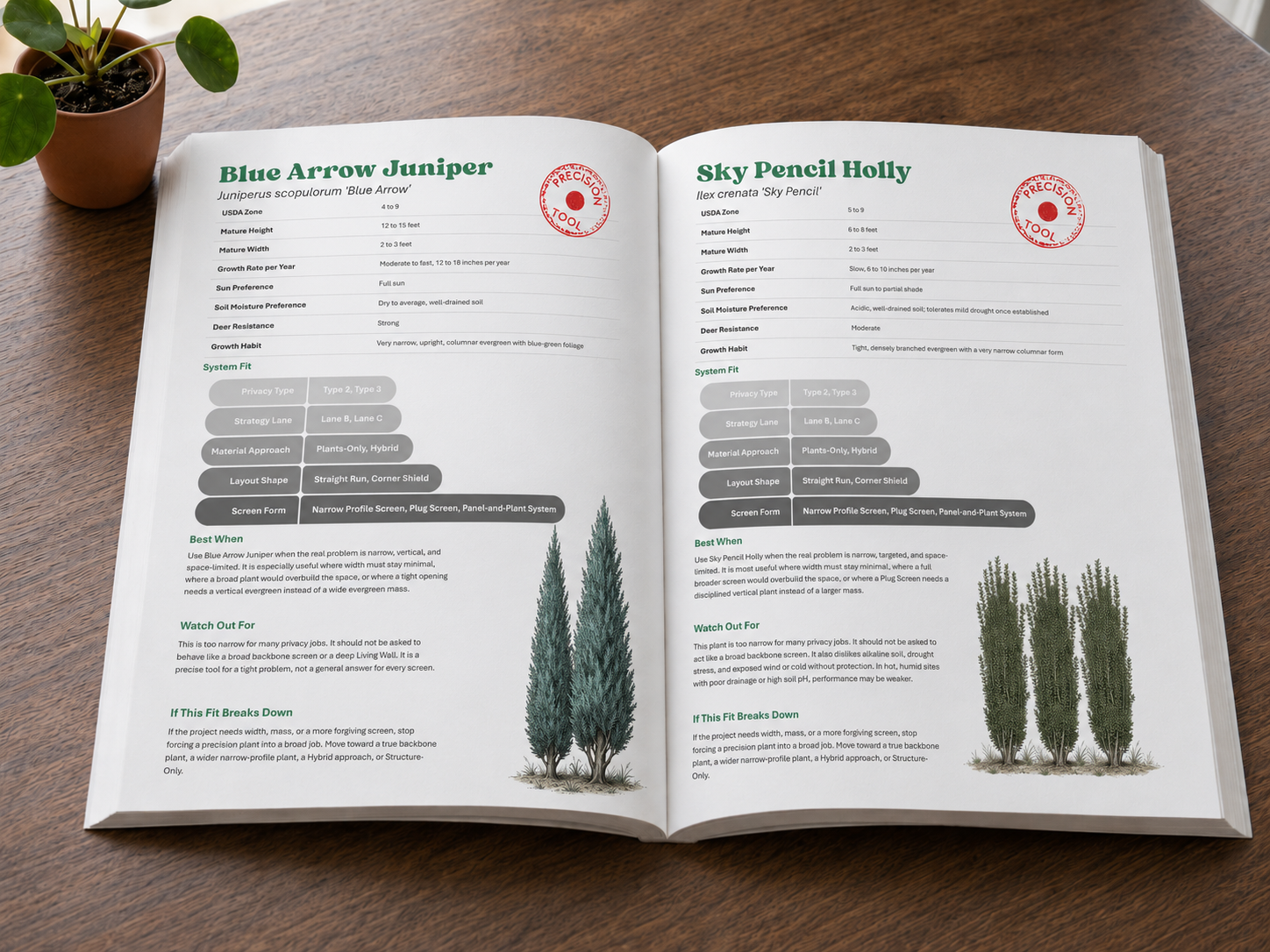
The decision system is supported by visual explanations, working worksheets, practical references, real-property situations, and guidance that follows the project beyond the first purchase.
It is not a thin idea book.
It is not a generic list of privacy plants.
It is not a promise that one solution works everywhere.
It is the tool you use before money, labor, and growing seasons are committed.
A Measured Method for Residential Privacy That Works
You Came Outside to Relax. Not to Feel Watched.
An upstairs deck now looks into the patio. A camera reaches the hot tub. A sidewalk view cuts across the pool. A neighbor’s window turns the outdoor table into a stage.
Nothing about the yard may have changed physically.
But the way your family uses it has.
Privacy Without Regret helps you solve that problem before you buy the hedge, fence, panel, plants, or labor. It gives you a clear way to understand the exposure, choose an approach your property can support, and build a privacy plan before the money is spent.
Plan first. Buy once. Maintain honestly.
This Field Guide Is for You If:
A neighbor’s deck, window, camera, driveway, or patio has changed how your yard feels.
Your family uses the patio, pool, hot tub, dining area, or play space differently because it feels exposed.
You know you need privacy but are not sure whether the answer is plants, structure, or both.
You are preparing to spend real money and want a plan before visiting a nursery, calling a contractor, or requesting HOA approval.
You have already tried a hedge, fence, or screen that did not solve the actual problem.
You need privacy soon but do not want urgency to push you into the wrong solution.
You want to understand the tradeoffs before committing to years of growth, watering, pruning, and maintenance.
You want the finished solution to protect the space without overbuilding the entire yard.
You Do Not Need to Become a Designer.
You need to be able to explain the job.
What is making the space feel exposed? What kind of solution fits the property? What are you willing to spend, wait for, and maintain? Which tradeoffs are acceptable, and which ones will make the project fail?
Once those questions have honest answers, the buying decision gets much easier.
The nursery can help you find material. A contractor can help you build. An installer can help you put it in the ground.
Privacy Without Regret helps you know what they are being asked to accomplish.
Questions, Answered.
Is This a Physical Book?
Yes. Privacy Without Regret is a printed Field Guide.
Is This Just a List of Privacy Plants?
No. Plant lists cannot know your yard, your view, your rules, or your timeline. The book helps you decide what kind of solution the property needs before specific materials take over the decision.
Do I Need Landscape Experience?
No. The Field Guide is written for homeowners who are willing to observe, measure, think honestly about tradeoffs, and verify local rules and regional plant suitability.
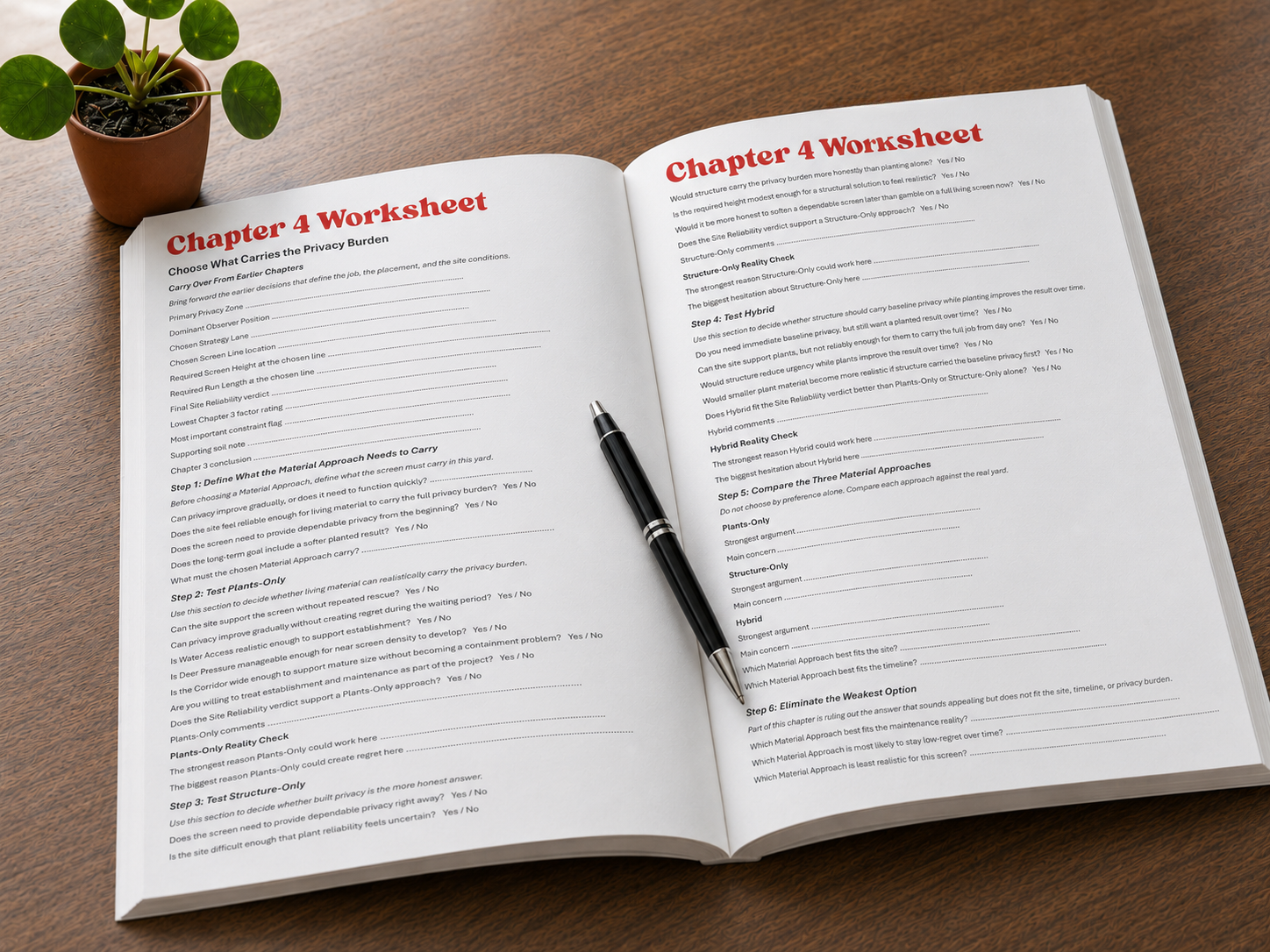
Does the Field Guide Include Worksheets?
Yes. Each chapter ends with a working worksheet that helps you record the decisions you make and carry them into the next stage of the plan. By the end of the Field Guide, you have a written record of the problem, the approach you chose, and the conditions the final solution needs to respect.
What Are the Book’s Specifications?
Privacy Without Regret is a 220-page paperback measuring 8.5 x 11 inches. The larger format gives the diagrams, worksheets, and planning sections enough room to be used, not just read.
Can I Use It If I Plan to Hire Someone?
Yes. A clear plan makes it easier to compare recommendations, ask better questions, and recognize when a suggested change affects the outcome.
What If I Need Privacy Quickly?
The Field Guide treats time as a real constraint. It helps you choose an approach that matches how soon the space needs to function instead of pretending every solution works on the same timeline.
Will It Tell Me Exactly What to Do in My Yard?
It gives you the system for making that decision. Your property, local rules, site conditions, budget, and maintenance tolerance still matter.
That is the point.
Make Your Yard Yours Again.
The privacy problem is already costing something if it changes how your family uses the space.
Do not let the first purchase be another guess.
Build the plan first.
A Measured Method for Residential Privacy That Works
You Came Outside to Relax. Not to Feel Watched.
An upstairs deck now looks into the patio. A camera reaches the hot tub. A sidewalk view cuts across the pool. A neighbor’s window turns the outdoor table into a stage.
Nothing about the yard may have changed physically.
But the way your family uses it has.
Privacy Without Regret helps you solve that problem before you buy the hedge, fence, panel, plants, or labor. It gives you a clear way to understand the exposure, choose an approach your property can support, and build a privacy plan before the money is spent.
Plan first. Buy once. Maintain honestly.